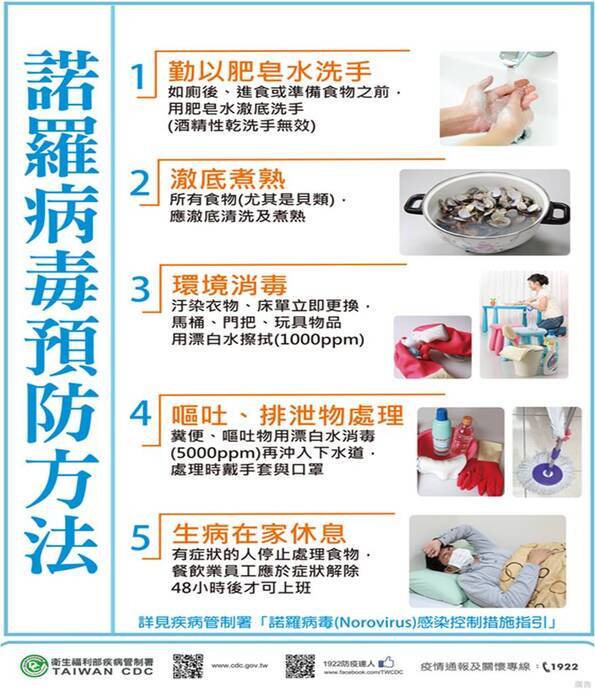
Notify the Ministry of Health Services of the "Norovirus Prevention and Control Campaign
1. In accordance with the copy of letter No. 1120200192 (Annex) from the Department of Disease Control, Ministry of Health and Welfare, dated March 20, 2011.
2. According to the Ministry of Health and Welfare's infectious disease surveillance data, the number of outpatient and emergency diarrhea visits nationwide from March 5 to March 11 this year reached 165,230, which is higher than the same period last year; and as of March 13, 204 cases of diarrhea clusters have been reported in Taiwan, of which 149 cases were detected as norovirus, with the largest number of diarrhea clusters occurring in restaurants (88 cases), followed by schools (71 cases) and densely populated areas. The most common locations for diarrhea clusters were restaurants (88 cases), followed by schools (71 cases) and densely populated institutions (23 cases).
3. Norovirus prevention and promotion:
(1) Norovirus is a common cause of viral gastroenteritis, highly infectious, mainly through ingestion of food or water contaminated by the virus, close contact with patients or inhalation of virus-containing vomit droplets and infection, the main epidemic season is from November to March each year.
(2) Pay attention to personal and environmental hygiene, do not drink or eat raw food, use common chopsticks and spoons when eating with others, and practice good personal hygiene by washing hands frequently (e.g. after going to the toilet, before eating or preparing food). In case of nausea, vomiting, diarrhea, abdominal cramps, fever, headache and muscle aches and other suspected symptoms, seek medical attention and pay attention to hydration and nutrition.
If diagnosed with norovirus infection, you should not attend classes or schools and wait 48 hours for symptoms to clear before returning to work and classes; caterers should stop handling food.
Translated with www.DeepL.com/Translator (free version)